

How to Choose Food Colors for Carbonated Drinks
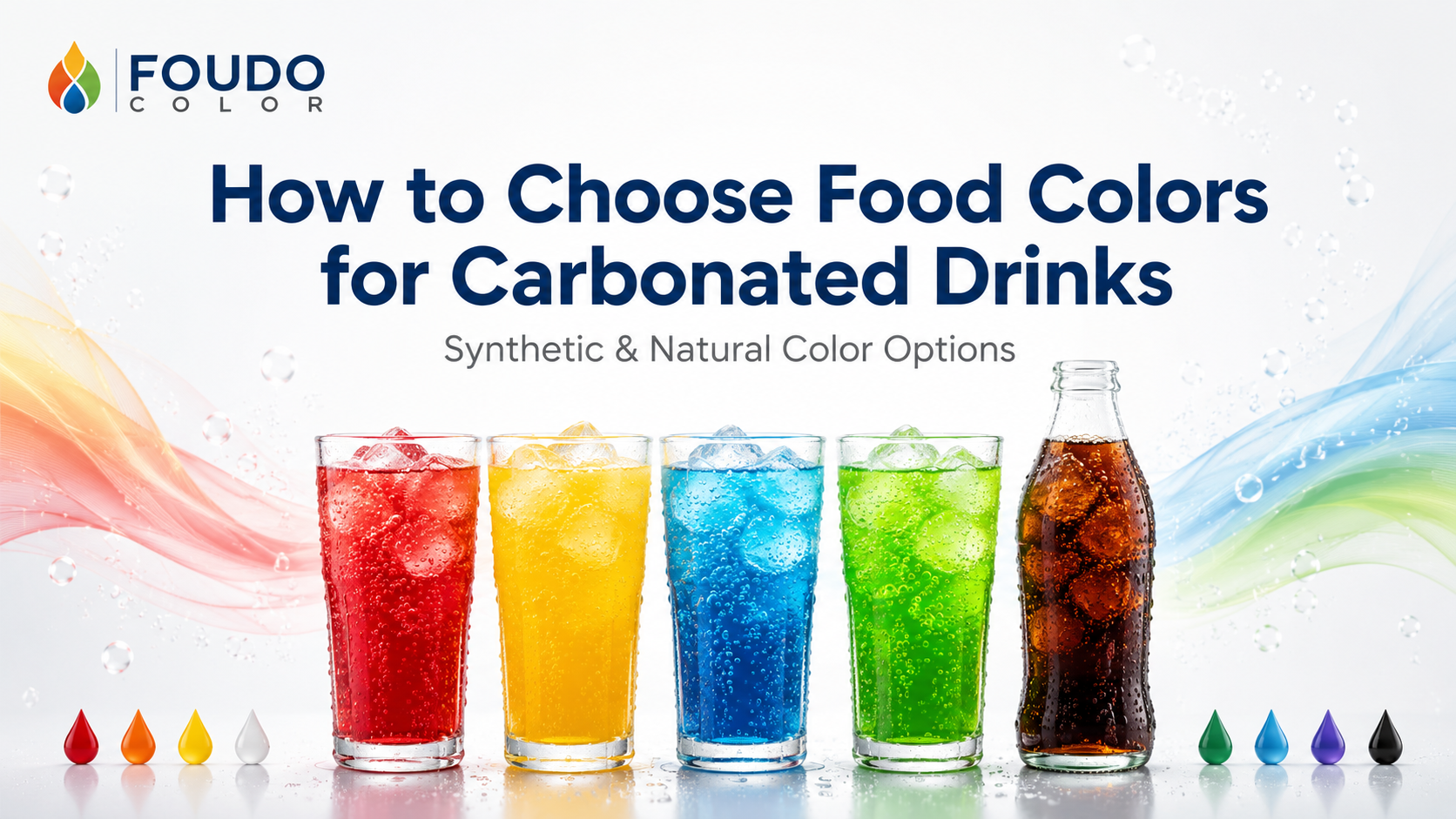
Color plays an important role in carbonated drinks. A bright red color can remind consumers of strawberry, cherry, or berry flavors. Yellow and orange shades are often used for lemon, orange, mango, pineapple, and tropical fruit drinks. Blue and green shades are popular for apple, lime, mint, sports drinks, energy drinks, and creative beverages. Brown shades are commonly used in cola, malt drinks, herbal drinks, coffee-flavored sparkling drinks, and dark functional beverages.
When choosing food colors for carbonated drinks, beverage manufacturers should consider several key points:
What color shade is required?
Is the drink clear or cloudy?
Is a synthetic color or natural color preferred?
Is the color permitted in the target market?
Does the drink need long shelf-life stability?
Is the color stable in acidic carbonated beverage systems?
The following color options are mainly based on food color choices that may be considered for carbonated drink applications under Chinese food additive regulations. They can also be used as a practical reference for customers in Africa, Southeast Asia, and other export markets. Final use should always be confirmed according to local regulations, product formulation, and application testing.
Red / Pink Color Options for Carbonated Drinks
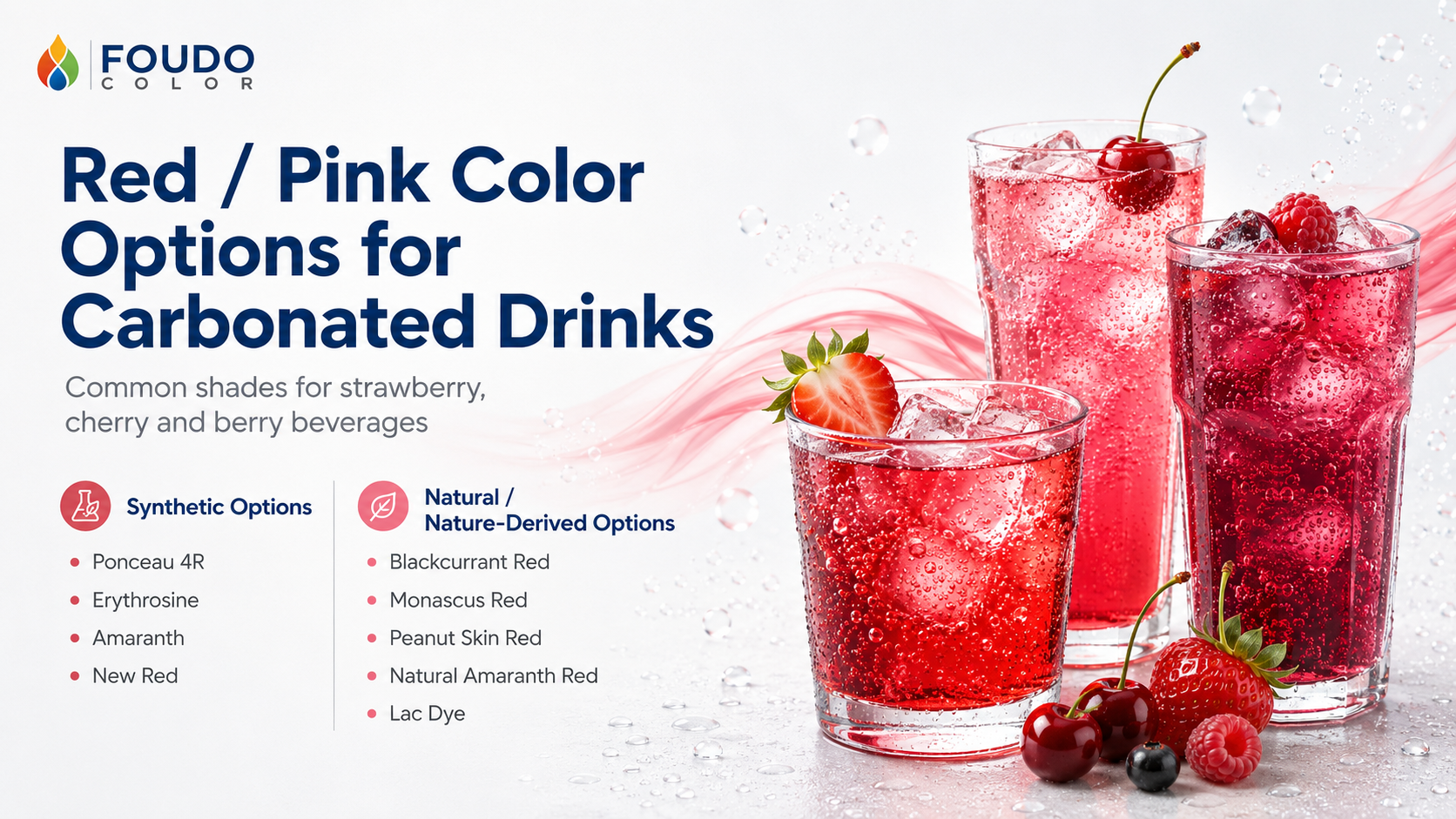
Red and pink shades are widely used in:
Strawberry soda
Cherry drinks
Berry sparkling drinks
Pomegranate-flavored drinks
Rose-flavored drinks
Pink creative beverages
Synthetic Color Options
1. Ponceau 4R
Ponceau 4R is suitable for bright red, strawberry red, cherry red, and pink beverage shades.
It is a common choice when customers need strong coloring power, bright appearance, and stable cost.
Suitable for:
Strawberry soda
Cherry drinks
Red fruit-flavored drinks
Pink sparkling beverages
2. Erythrosine
Erythrosine can provide bright pink and cherry red shades.
It is suitable for drinks that require a vivid pink or bright red appearance.
Suitable for:
Cherry-flavored drinks
Bright pink soda
Sweet red beverages
Note: For products intended for the U.S. market, Erythrosine / FD&C Red No. 3 should be handled carefully due to regulatory restrictions.
3. Amaranth
Amaranth can be used for red, berry red, and deep pink shades.
It is suitable for beverage products requiring a deeper red color.
Suitable for:
Berry-flavored drinks
Deep red soda
Mixed fruit beverages
Note: Amaranth is not recommended for food and beverage products intended for the U.S. market. For Africa, Southeast Asia, and other markets, local regulations should be checked before use.
4. New Red
New Red can be used for vivid red beverage shades.
It is suitable for drinks that require a strong visual red color.
Suitable for:
Red fruit-flavored soda
Strawberry-flavored drinks
Bright red beverages
Natural / Nature-Derived Color Options
1. Blackcurrant Red
Blackcurrant Red is suitable for berry red, purple-red, and natural red shades.
It is a good option for customers who want a natural red color direction.
Suitable for:
Blackcurrant drinks
Berry sparkling water
Natural red fruit-flavored drinks
2. Monascus Red
Monascus Red can be used for natural red shades, from orange-red to deep red.
It is suitable for customers who want to reduce synthetic colors and use nature-derived color options.
Suitable for:
Red fruit-flavored drinks
Plant-based beverages
Natural red beverages
3. Peanut Skin Red
Peanut Skin Red can be used for red, brown-red, or natural red shades.
It is suitable for some beverage products that require plant-based color options.
Suitable for:
Natural red drinks
Brown-red beverages
Mixed fruit-flavored drinks
4. Natural Amaranth Red
Natural Amaranth Red is suitable for natural red and pink shades.
It can be tested as one of the natural red color options for carbonated drinks.
Suitable for:
Pink beverages
Red fruit-flavored drinks
Natural sparkling drinks
5. Lac Dye
Lac Dye can provide red, rose red, and purple-red shades.
It is suitable for drinks that require a special red tone.
Suitable for:
Rose-flavored drinks
Berry beverages
Purple-red sparkling drinks
Red / Pink Selection Advice
For bright color, strong coloring power, and cost efficiency, synthetic red colors can be considered.
For natural, plant-based, or premium beverage positioning, Blackcurrant Red, Monascus Red, Peanut Skin Red, Natural Amaranth Red, and Lac Dye can be tested.
Yellow / Orange Color Options for Carbonated Drinks
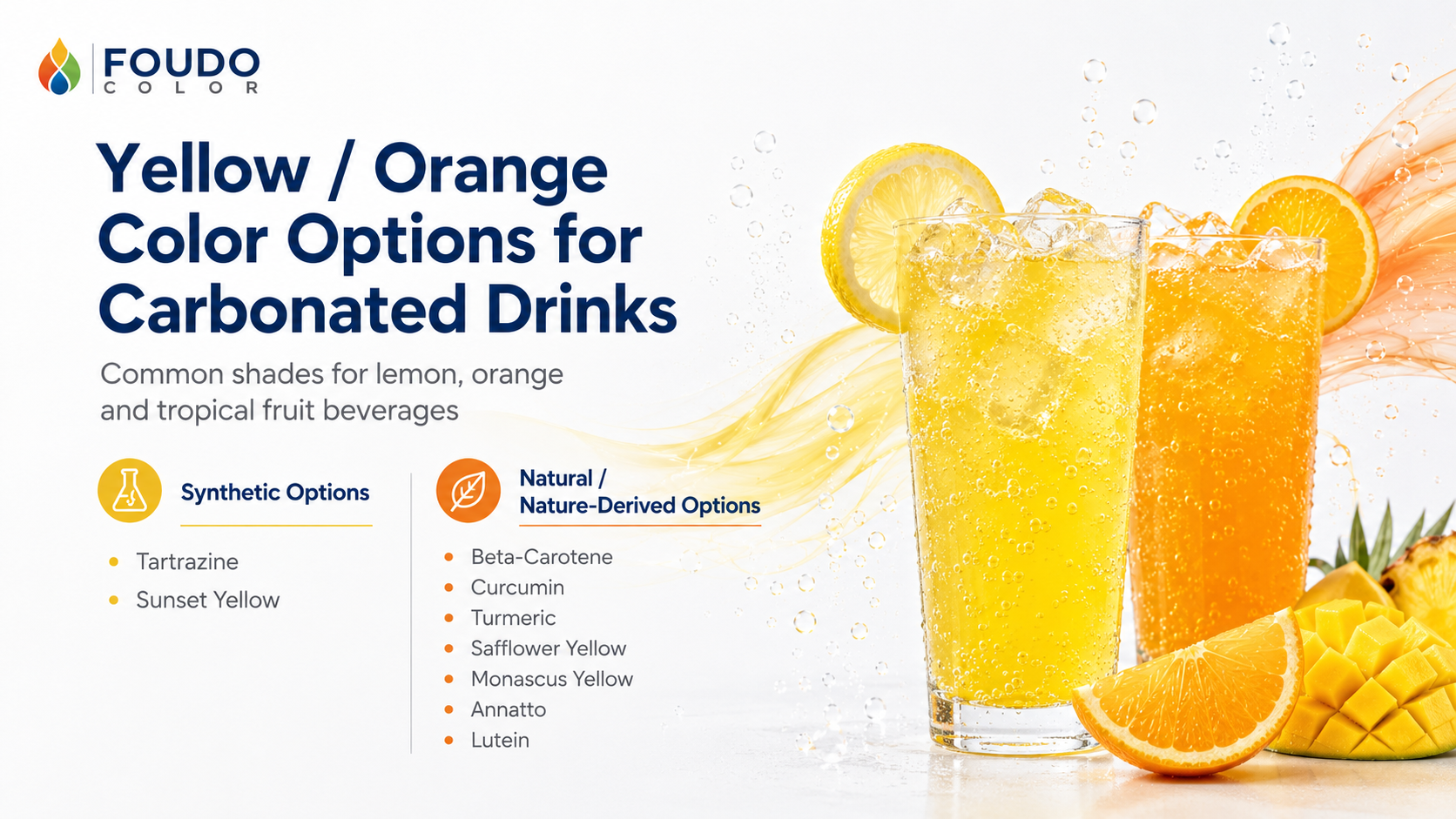
Yellow and orange shades are commonly used in:
Lemon soda
Orange soda
Mango drinks
Pineapple drinks
Tropical fruit beverages
Energy drinks
Synthetic Color Options
1. Tartrazine
Tartrazine is suitable for bright yellow, lemon yellow, and light yellow beverage shades.
It is a common choice when customers need a very bright yellow color.
Suitable for:
Lemon soda
Pineapple-flavored drinks
Yellow sparkling water
Energy drinks
2. Sunset Yellow
Sunset Yellow is suitable for orange-yellow, orange-flavored drinks, and tropical fruit shades.
It can also be blended with Tartrazine to create different yellow and orange shades.
Suitable for:
Orange soda
Mango drinks
Tropical fruit beverages
Orange-yellow functional drinks
Natural / Nature-Derived Color Options
1. Beta-Carotene
Beta-Carotene can provide yellow to orange-yellow shades.
It is suitable for orange, mango, and tropical fruit beverages. For clear carbonated drinks, a water-dispersible form is usually recommended.
Suitable for:
Orange-flavored drinks
Mango drinks
Yellow or orange-yellow sparkling beverages
2. Curcumin
Curcumin can provide a bright yellow color and is suitable for natural yellow color applications.
Light stability and shelf-life performance should be tested before commercial use.
Suitable for:
Lemon-flavored drinks
Natural yellow beverages
Health-positioned drinks
3. Turmeric
Turmeric is suitable for natural yellow color applications.
It can be used in beverage products that emphasize plant-based or natural ingredients.
Suitable for:
Yellow plant-based drinks
Health-positioned sparkling drinks
Natural-flavored beverages
4. Safflower Yellow
Safflower Yellow is suitable for yellow shades in water-based beverage systems.
It is a common option for customers who want a natural yellow color.
Suitable for:
Lemon drinks
Yellow fruit-flavored beverages
Natural yellow sparkling water
5. Monascus Yellow
Monascus Yellow can be used for nature-derived yellow shades.
It is suitable for customers who are looking for natural color options.
Suitable for:
Yellow beverages
Orange-yellow drinks
Nature-derived beverage products
6. Annatto
Annatto is suitable for orange-yellow shades.
For clear drinks, dispersion, stability, and clarity should be tested carefully.
Suitable for:
Orange-flavored drinks
Mango drinks
Orange-yellow beverages
7. Lutein
Lutein can be used for yellow to orange-yellow shades.
It is suitable for customers who want natural or nutrition-related color options, but the product form should be checked for beverage compatibility.
Suitable for:
Yellow functional drinks
Orange-yellow beverages
Health-concept drinks
Yellow / Orange Selection Advice
For bright, stable, and cost-effective yellow or orange shades, Tartrazine and Sunset Yellow can be considered.
For natural color solutions, Safflower Yellow, Curcumin, Turmeric, Beta-Carotene, Annatto, Lutein, and Monascus Yellow can be tested.
For clear carbonated drinks, natural orange-yellow colors should be tested carefully to avoid cloudiness, sedimentation, or separation.
Blue / Green Color Options for Carbonated Drinks
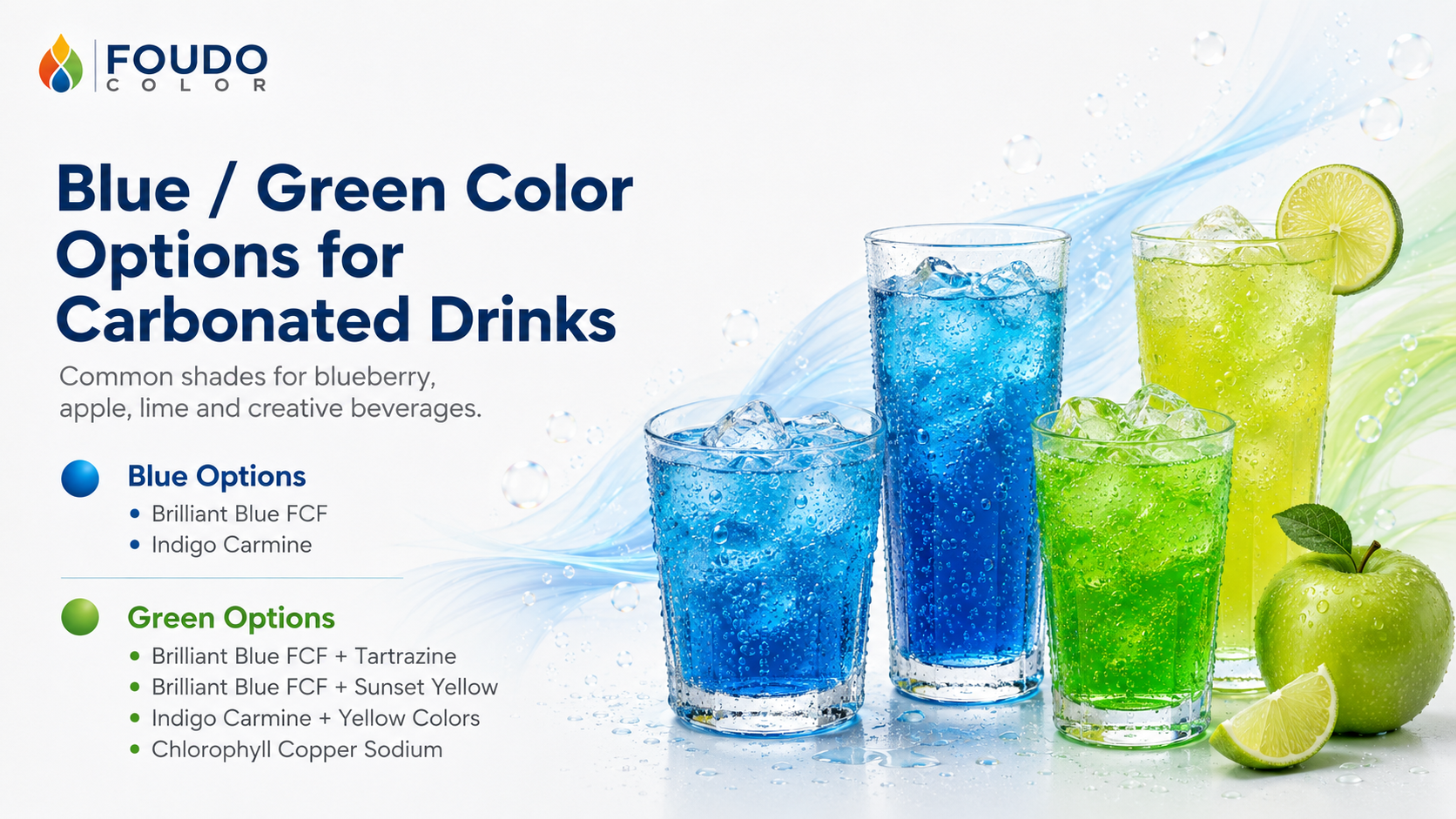
Blue and green shades are commonly used in:
Blueberry-flavored drinks
Green apple soda
Lime soda
Mint-flavored drinks
Sports drinks
Energy drinks
Creative sparkling beverages
Synthetic Blue Color Options
1. Brilliant Blue FCF
Brilliant Blue FCF is suitable for bright blue drinks.
It can also be blended with yellow colors to create green shades.
Suitable for:
Blue sparkling drinks
Blueberry-flavored drinks
Sports drinks
Creative beverages
2. Indigo Carmine
Indigo Carmine is suitable for deeper blue or blue-purple shades.
It can be used for drinks that require a darker or more unique blue color.
Suitable for:
Deep blue drinks
Blue-purple beverages
Special-flavored drinks
Green Color Options
Green shades are often created by blending blue and yellow colors.
1. Brilliant Blue FCF + Tartrazine
This combination can create bright green, green apple, and lime green shades.
It is suitable for clear and vivid green carbonated drinks.
Suitable for:
Green apple soda
Lime drinks
Green sparkling water
2. Brilliant Blue FCF + Sunset Yellow
This combination can create warmer green or deeper green shades.
It is suitable for drinks that require a richer green color.
Suitable for:
Tropical green beverages
Functional drinks
Deep green soda
3. Indigo Carmine + Yellow Colors
This combination can create deep green, blue-green, or special green shades.
It is suitable for creative beverages and functional drinks.
Suitable for:
Blue-green drinks
Deep green beverages
Creative sparkling drinks
4. Chlorophyll Copper Sodium
Chlorophyll Copper Sodium can be considered for green color applications.
However, green shades in acidic carbonated drinks should always be tested carefully for pH stability, light stability, and shelf-life performance.
Suitable for:
Plant-concept beverages
Natural green color direction
Herbal-flavored drinks
Blue / Green Selection Advice
For stable, clear, and vivid blue or green drinks, Brilliant Blue FCF, Indigo Carmine, and blue-yellow blends are usually easier to apply.
For a natural green direction, Chlorophyll Copper Sodium can be tested, but stability in acidic beverages should be confirmed before use.
Brown / Cola Color Options for Carbonated Drinks
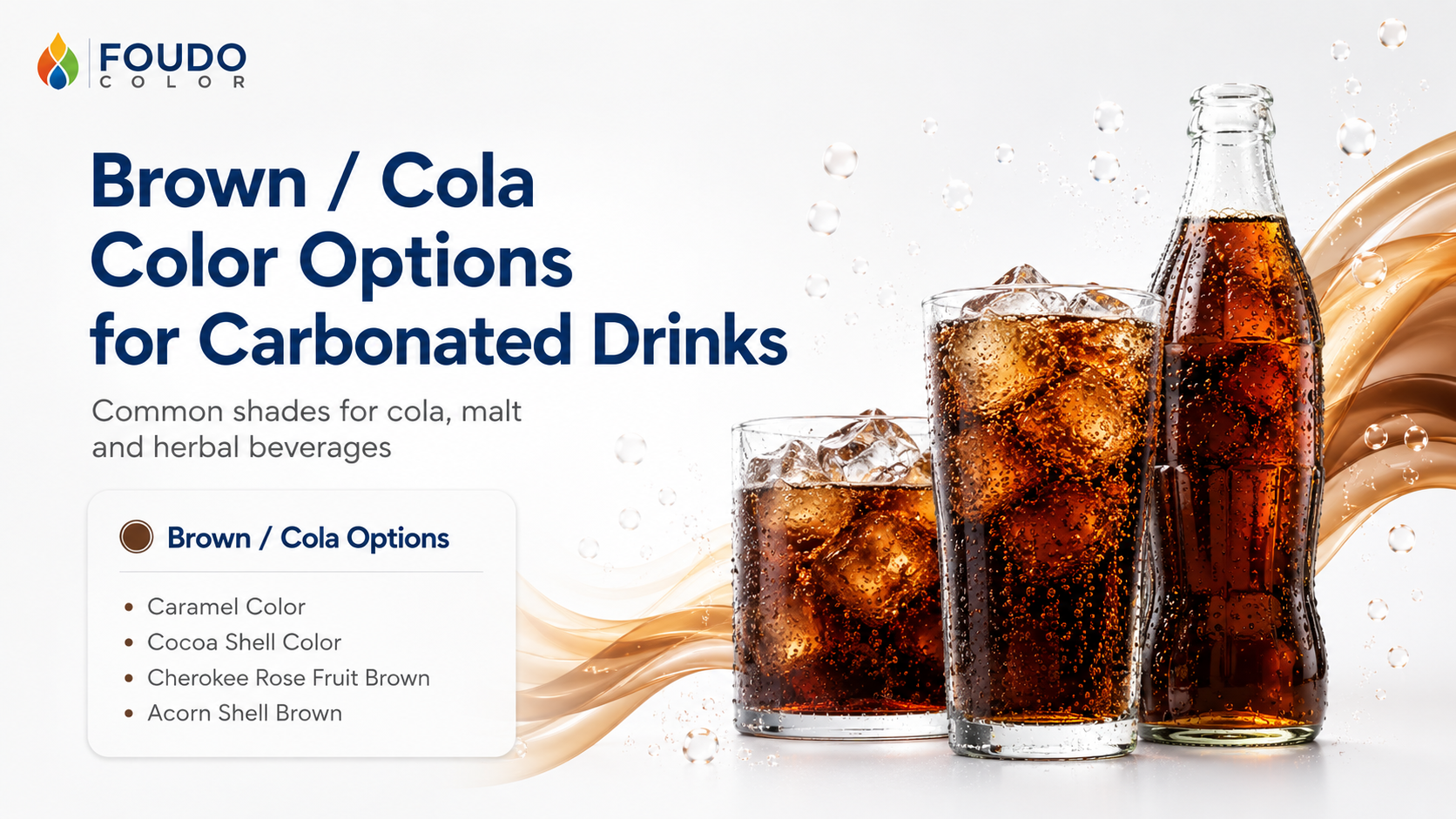
Brown shades are commonly used in:
Cola
Malt drinks
Herbal drinks
Coffee-flavored sparkling drinks
Dark functional beverages
Brown Color Options
1. Caramel Color
Caramel Color is the most common brown color choice for cola-type carbonated drinks.
It is suitable for cola shades, dark brown, amber, and herbal beverage tones.
Suitable for:
Cola drinks
Malt beverages
Herbal drinks
Dark functional drinks
2. Cocoa Shell Color
Cocoa Shell Color can be used for natural brown color directions.
It is suitable for customers who want plant-derived brown color options.
Suitable for:
Brown beverages
Herbal drinks
Plant-derived beverages
3. Cherokee Rose Fruit Brown
Cherokee Rose Fruit Brown can be used for brown or reddish-brown shades.
It is suitable for beverage products that need a natural brown tone.
Suitable for:
Reddish-brown drinks
Herbal-flavored beverages
Natural brown drinks
4. Acorn Shell Brown
Acorn Shell Brown can be used for natural brown color directions.
It is suitable for customers who want plant-derived brown food colors.
Suitable for:
Brown sparkling drinks
Herbal beverages
Dark plant-based drinks
Brown / Cola Selection Advice
For cola-type drinks, Caramel Color is usually the first choice.
For natural brown or plant-derived brown color directions, Cocoa Shell Color, Cherokee Rose Fruit Brown, and Acorn Shell Brown can be tested.
Quick Color Selection Guide for Beverage Customers
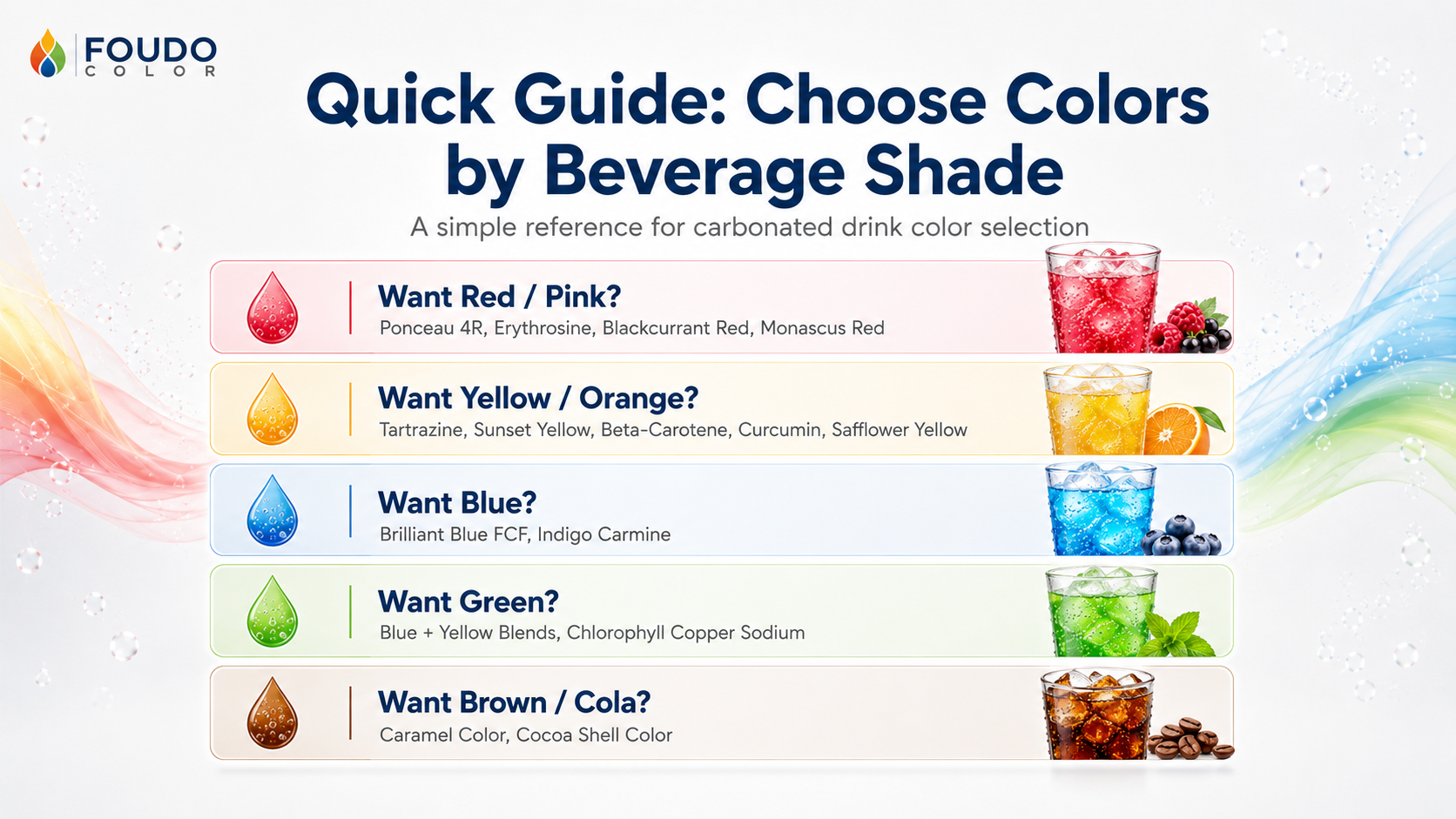
If customers want red or pink drinks, they can consider Ponceau 4R, Erythrosine, Amaranth, New Red, or natural options such as Blackcurrant Red, Monascus Red, Peanut Skin Red, Natural Amaranth Red, and Lac Dye.
If customers want yellow or orange drinks, they can consider Tartrazine, Sunset Yellow, or natural options such as Beta-Carotene, Curcumin, Turmeric, Safflower Yellow, Monascus Yellow, Annatto, and Lutein.
If customers want blue drinks, they can consider Brilliant Blue FCF or Indigo Carmine.
If customers want green drinks, they can consider blends of Brilliant Blue FCF with Tartrazine, Brilliant Blue FCF with Sunset Yellow, Indigo Carmine with yellow colors, or Chlorophyll Copper Sodium.
If customers want brown or cola-colored drinks, they can consider Caramel Color, Cocoa Shell Color, Cherokee Rose Fruit Brown, and Acorn Shell Brown.
Regulatory and Export Market Notes
The color options listed in this article are mainly based on color additives that may be considered for carbonated drink applications under Chinese food additive regulations. Regulations vary by country and region. Before commercial use, customers should confirm whether the selected color is permitted in the target market.
For customers in Africa and Southeast Asia, local regulations, Codex standards, EU references, or importing country requirements may apply. Before finalizing a color solution, it is recommended to confirm:
Target sales country
Beverage type and food category
Whether synthetic colors are accepted
Whether natural colors are required
Whether Halal, Kosher, or other certifications are needed
Maximum permitted use level
Labeling requirements
For the U.S. market, special attention should be paid to Erythrosine / FD&C Red No. 3 and other colors that may have different regulatory status from China or other markets.
For the EU market, some synthetic colors may require additional labeling statements.
Final color selection should be based on target market regulations, beverage formulation, pH value, clarity requirements, and stability testing.
How Foudo Color Can Support Your Beverage Projects
Foudo Color provides synthetic and natural food color solutions for carbonated drinks and other beverage applications.
We can support:
Red, pink, yellow, orange, blue, green, brown, and cola color shade selection
Synthetic and natural food color samples
Color matching for carbonated drinks
Blue, green, orange, and other blended color solutions
Natural alternatives to synthetic food colors
Initial product screening based on target market requirements
If you are developing carbonated drinks, fruit-flavored soda, sparkling water, energy drinks, or cola-type beverages, contact Foudo Color for food color samples and color matching support.
