

Converting from Synthetic to Natural Food Colors
Many food and beverage manufacturers are reviewing how to replace synthetic food colors with natural color solutions. The goal is not only to follow market demand for cleaner labels, but also to keep the product color attractive, stable, and suitable for real production conditions.
At Foudo Color, we support practical color conversion based on product type, target shade, pH value, heat process, dosage level, packaging, shelf-life requirement, and destination market regulations. Instead of treating natural colors as a simple one-to-one replacement, we help customers choose a realistic starting direction for testing.
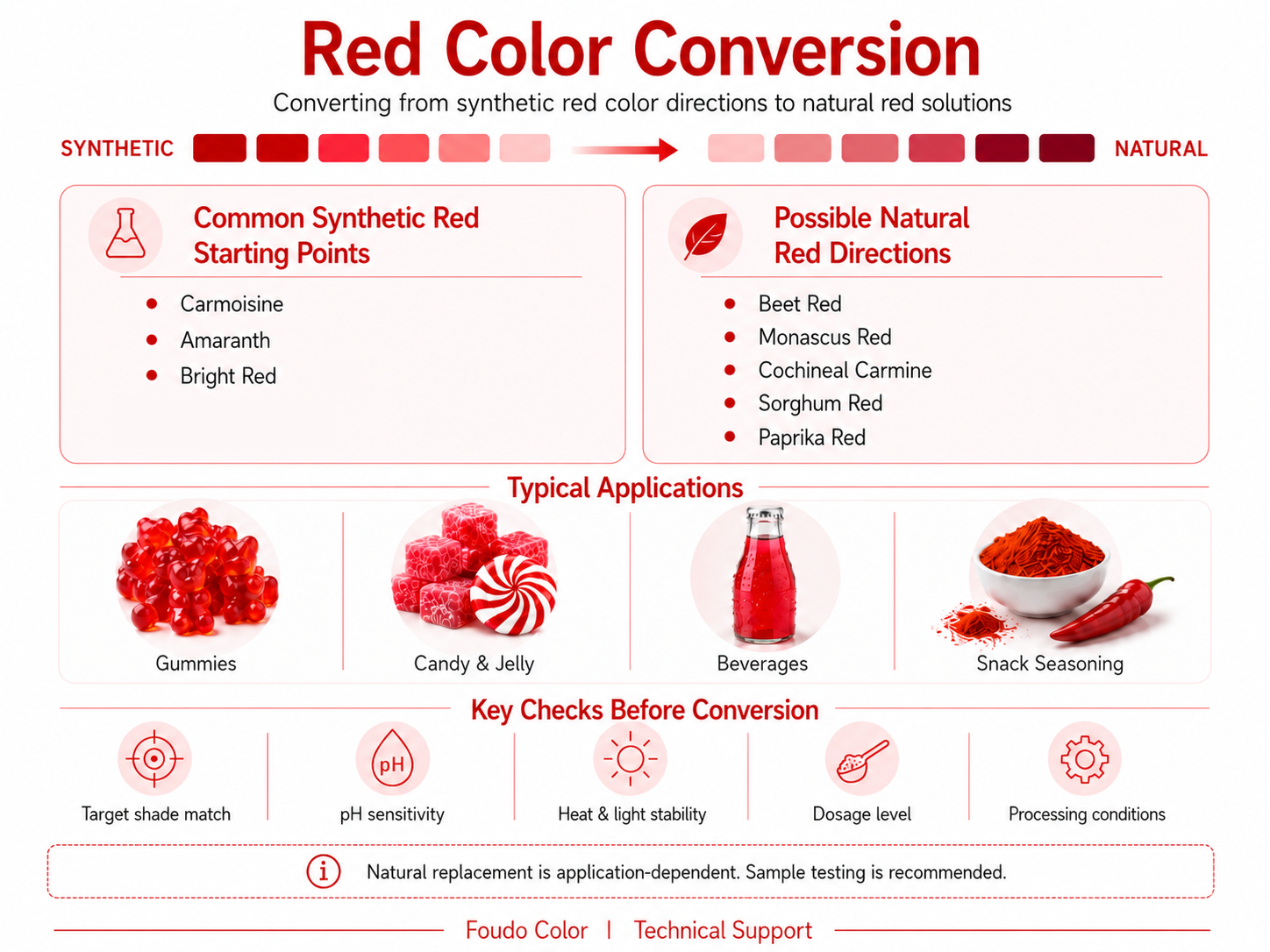
Red Color Conversion
For red shade conversion, common synthetic starting points may include Carmoisine, Amaranth, Bright Red, and other red blended colors. Possible natural red directions may include Beet Red, Monascus Red, Cochineal Carmine, Sorghum Red, and Paprika Red.
Different red color sources have different strengths. Beet Red can be a good option for soft red to pink-red shades in selected beverage, jelly, candy, dessert, and frosting systems. Monascus Red and Sorghum Red can be reviewed for deeper red food applications where the formula and market regulations allow. Cochineal Carmine can provide strong red performance, but customers should review labeling, allergen, vegetarian, and destination market requirements before use. Paprika Red is more suitable for red-orange and savory color directions, especially in snack seasoning, sauces, oil-based systems, and spicy food products.
When converting red shades, manufacturers should review pH, heat exposure, light stability, oxidation risk, dosage level, and the acceptable color difference between the synthetic standard and the natural result.
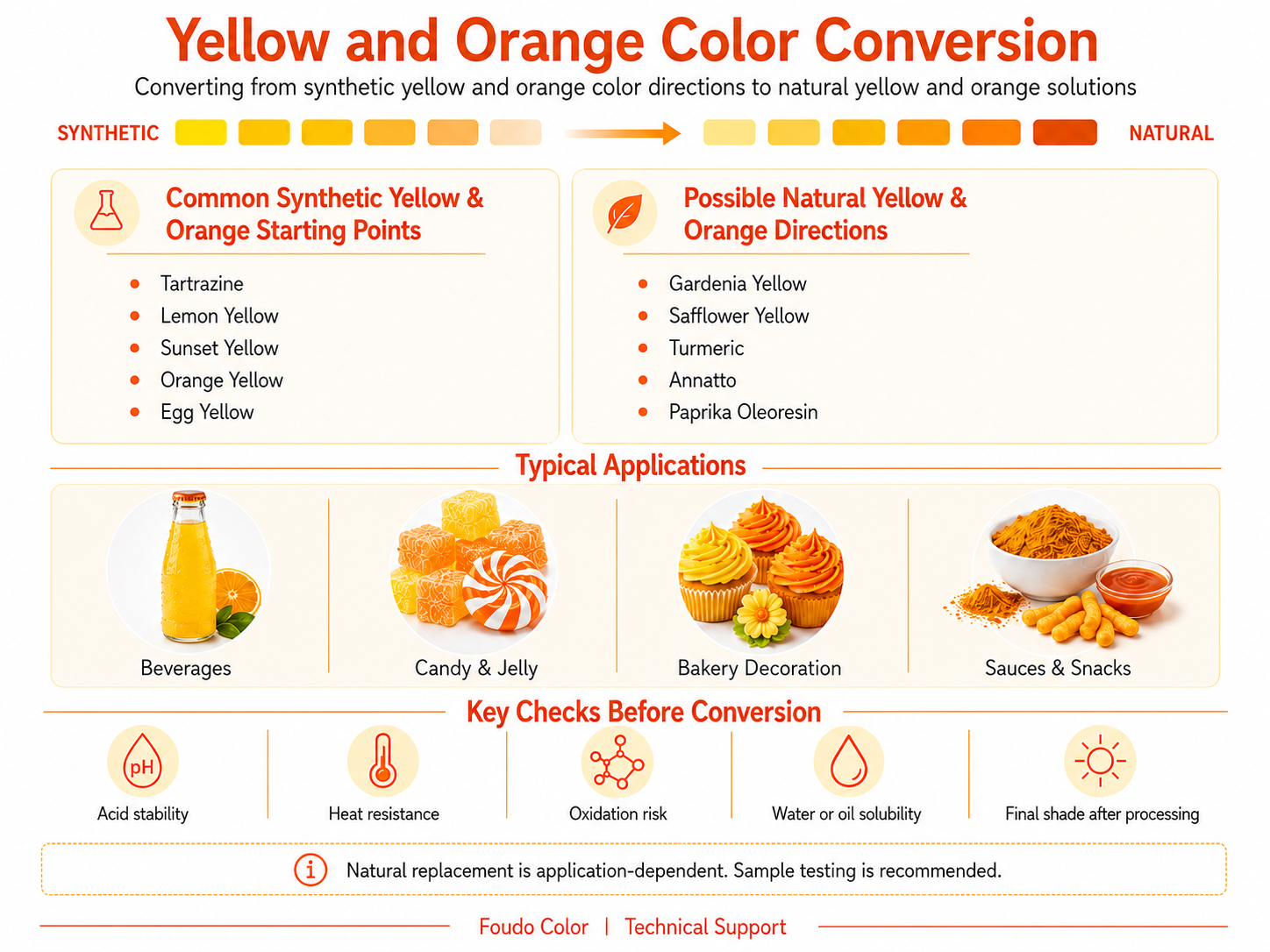
Yellow and Orange Color Conversion
Yellow and orange conversions may start from synthetic colors such as Tartrazine, Lemon Yellow, Sunset Yellow, Orange Yellow, Egg Yellow, and orange-red blended shades. Possible natural directions may include Gardenia Yellow, Safflower Yellow, Turmeric, Annatto, Paprika Oleoresin, and natural orange-yellow blends.
Gardenia Yellow and Safflower Yellow are useful directions for clean yellow shades in beverages, jelly, candy, bakery decoration, sauces, and other food systems after application testing. Turmeric can provide a bright yellow to golden yellow direction, while Annatto is often reviewed for yellow-orange shades in bakery, dairy-style products, sauces, snacks, and seasonings. Paprika Oleoresin is more suitable for orange to red-orange shades, especially in savory products, sauces, snack coatings, and oil-based applications.
Key review points for yellow and orange conversion include acid stability, heat resistance, oxidation, transparency requirement, oil or water solubility, and the final shade after processing.
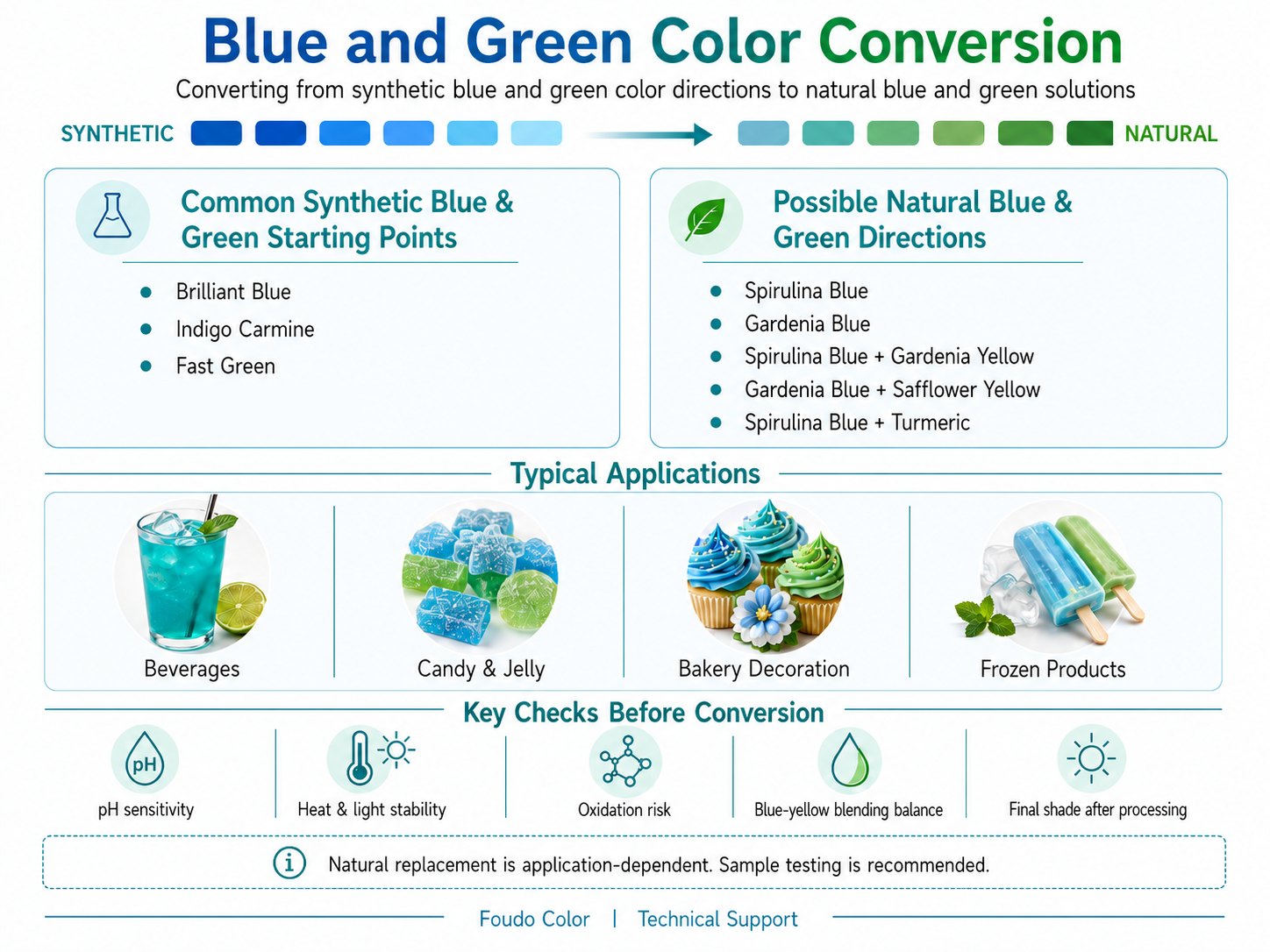
Blue and Green Color Conversion
Blue and green conversions may begin from synthetic blue or green shades. For natural blue color directions, common options include Spirulina Blue and Gardenia Blue.
Spirulina Blue is suitable for selected blue shade applications such as candy, jelly, coatings, bakery decoration, frozen products, and beverage systems where the formula conditions are appropriate. Gardenia Blue can also be reviewed for blue shade development, depending on the target market, application, and regulatory requirement.
Natural green shades are usually developed by combining a natural blue direction with a natural yellow direction. For example, Spirulina Blue or Gardenia Blue may be adjusted with Gardenia Yellow, Safflower Yellow, Turmeric, or other suitable yellow sources to reach different green shades.
Because blue and green colors can be more sensitive to pH, heat, light, and oxidation, application testing is especially important. A green shade that looks good in water may perform differently in candy, jelly, beverage, sauce, or baked products.
What to Check Before Conversion
Converting from synthetic to natural colors is not a simple one-to-one replacement. Before selecting a natural direction, manufacturers should evaluate:
target shade
product pH
heat process
light exposure
oxidation risk
dosage level
packaging system
shelf-life requirements
destination market regulations
How Foudo Color Supports Testing
Foudo Color supports synthetic, natural, and blended color routes depending on the application, cost target, and destination market. We can help customers review application conditions, select a practical starting point, prepare samples, and adjust the shade direction for testing.
If you are evaluating a conversion from synthetic to natural food colors, contact Foudo Color with your product type, target color, preferred form, and destination market.
